Gout (
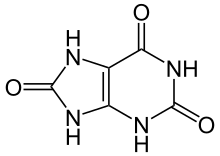
gouty arthritis) is one type of arthritis in which sudden, severe, painful attacks occur in the joints. Although men are more likely to be affected by this condition, the risk in women increases after menopause. Symptoms typically occur at night, without warning, and may include intense pain in the joints, particularly in the big toe. Joint pain typically lasts from 5 to 10 days and then the discomfort resolves over 1 to 2 weeks. Joints affected by this condition are likely to be tender, red, and swollen. In persons affected by gout, the body either produces too much uric acid, or eliminates amounts from the body that are too small. The consequence is a build-up of uric acid, forming urate crystals in joints, which causes the pain, swelling and inflammation of gout.
Gout attacks may be treated with nonsteroidal anti-inflammatory medications (NSAIDs). These include naproxen (Aleve) and ibuprofen (Advil, Motrin). For persons affected by more severe cases of gout, prednisone may be prescribed. Steroids also may be injected into the affected joint. Preventive medications may be prescribed, such as allopurinol (Zyloprim) and probenecid, to help decrease the severity of future episodes.



No comments:
Post a Comment