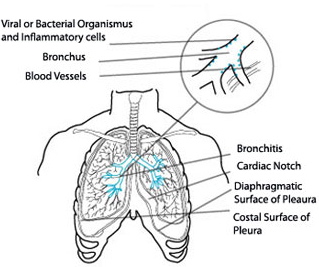
A typical sign of acute
bronchitis is a cough that lasts for at least 5 days, possibly several weeks. In contrast, chronic bronchitis is a condition that affects persons with chronic obstructive pulmonary disease (COPD). With chronic bronchitis, the cough lasts for at least 3 months, and occurs at least once per year over two years in a row. Acute bronchitis is typically caused by an infection with a virus in the upper airway, which leads to inflammation of the lungs. Influenza viruses may cause acute bronchitis. A fever may indicate that influenza is the cause of the condition. Symptoms similar to those of the common cold may also be present with acute bronchitis.
For treatment of cold symptoms of acute bronchitis, nonsteroidal anti-inflammatory drugs (NSAIDs), acetaminophen, and nasal decongestants may help. With rare exceptions, antibiotics should typically not be used for treatment of acute bronchitis since a virus rather than bacteria is most commonly the cause of the condition. For persons infected with influenza viruses, the neuraminidase inhibitors oseltamivir (Tamiflu) or zanamivir (Relenza) may be prescribed. For persons diagnosed with COPD experiencing an exacerbation, albuterol (Proventil, Ventolin) and ipratropium (Atrovent) are short-acting inhaled medications that may be prescribed.



No comments:
Post a Comment