
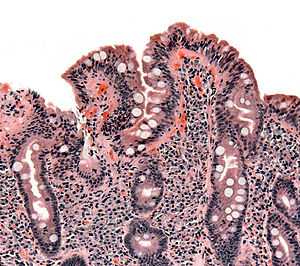
There is currently no cure available for celiac disease. However, dietary changes can prevent symptoms. Foods that contain gluten should be avoided. Vitamin and mineral supplements, such as calcium, vitamin D, and vitamin B-12 may be recommended to improve any nutrient deficiencies. Although the majority of individuals with the condition will not experience symptoms with a gluten free diet, a small percentage will continue to experience symptoms. If severe inflammation of the small intestine occurs, a steroid, such as prednisone, may be prescribed to alleviate symptoms temporarily until the gluten-free diet has a positive impact on the condition.
More information: http://en.wikipedia.org/wiki/Celiac_disease

Brought to you by Cheek & Scott Drugs, Inc.
A Community Pharmacy serving North Central Florida.
Live Oak:
386-362-2591
1520 Ohio Ave South; Live Oak, FL 32064
Lake City:
386-754-5377
161 Stonegate Ter; Suite 105; Lake City, FL 32024
Online:
www.CheekAndScott.com


No comments:
Post a Comment